






















Educational Attitudes

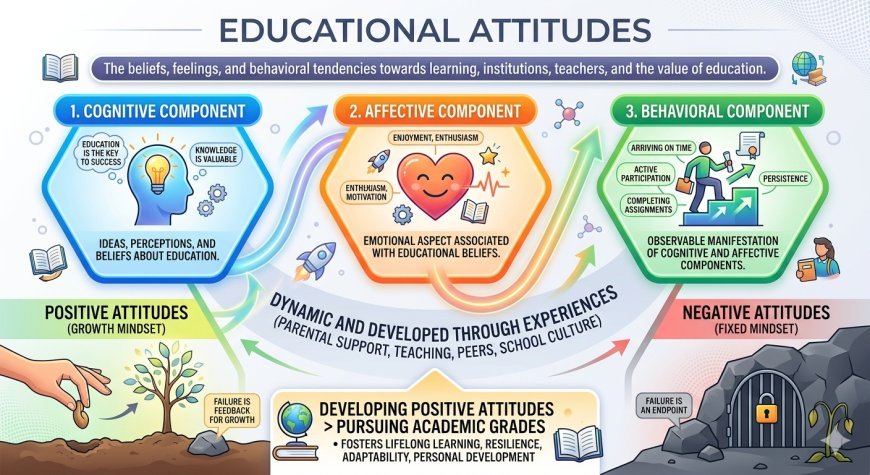
MNAINDONESIA.ID - Educational attitudes are the beliefs, feelings, and behavioral tendencies that an individual possesses toward the learning process, educational institutions, teachers, and the value of education itself. These attitudes function as a mental filterthat significantly influences how students and educators respond to academic challenges.
In general, educational attitudes can be categorized into three main dimensions:
1. Cognitive Component
This component involves ideas, perceptions, and beliefs about education. For example, a person may believe that “education is the key to success” or, conversely, that “school curricula are not relevant to the job market.”
2. Affective Component
This refers to the emotional aspect associated with educational beliefs. It includes feelings such as enjoyment, enthusiasm, motivation, anxiety, frustration, or boredom when participating in educational activities.
3. Behavioral Component
This is the observable manifestation of cognitive and affective components. Students with positive educational attitudes typically demonstrate behaviors such as arriving on time, actively participating in discussions, completing assignments responsibly, and persisting when faced with difficult learning materials.
One of the most important characteristics of educational attitudes is that they are dynamic and can be developed. Educational attitudes are not innate traits; rather, they are shaped through accumulated experiences. Environmental factors such as parental support, inspiring teaching methods, peer influence, and a positive school culture play a crucial role in determining whether attitudes become positive (growth mindset) or negative (fixed mindset).
Individuals with positive educational attitudes tend to view failure not as an endpoint but as valuable feedback for improvement and growth. In contrast, negative educational attitudes often become major barriers to learning, regardless of a person's level of intellectual ability (IQ).
Therefore, in the modern educational landscape, developing positive attitudes toward learning is far more important than merely pursuing academic grades, as these attitudes foster lifelong learning, resilience, adaptability, and continuous personal development.
What's Your Reaction?